
The Lifecycle of Recycled Metals
Every time you toss a piece of scrap metal into a recycling bin, you set a chain of events into motion. That old copper wire or aluminum siding moves through a carefully managed process that transforms it into something useful again. Once you understand how recycled metal moves from collection to reuse, you’ll have a better picture of how your work supports a cleaner community, stronger supply chain, and more efficient use of resources.
Stage 1: Metal Collection
The recycled metal lifecycle begins with collection. This can happen in several ways:
- Industrial scrap pickup: Manufacturing facilities generate consistent streams of recyclable metal that are collected in bulk.
- Commercial drop-offs: Contractors, demolition crews, and businesses bring in scrap metal from job sites.
- Public recycling programs: Households contribute smaller quantities through municipal systems.
Efficient metal recycling collection sets the tone for everything that follows. Clean, well-sorted loads at this stage reduce processing times and improve the quality of the final product.
Stage 2: Sorting & Separation
Once the materials arrive at a facility, the next step is to separate them. Sorting matters because different metals require different processing methods. Mixing them would reduce efficiency and lower the value of the recycled material.
Metals sorted in recycling plants go through both manual and automated systems to ensure accuracy. Here’s what the process entails:
- Magnetic separation: Ferrous metals, such as steel and iron, are extracted from the pile using powerful magnets.
- Eddy current systems: Non-ferrous metals, such as aluminum and copper, are separated using electromagnetic fields.
- Manual sorting: Workers identify and remove materials that machines might miss.
- Advanced detection: Special sensors and AI-driven sorting systems speed up the process.
Stage 3: Cleaning & Preparation
Before metals can be processed further, they must be cleaned to remove contaminants such as paint, coatings, plastics, and other debris. This stage often includes degreasing to strip away oil and other residues, as well as thermal treatment to remove coatings or adhesives.
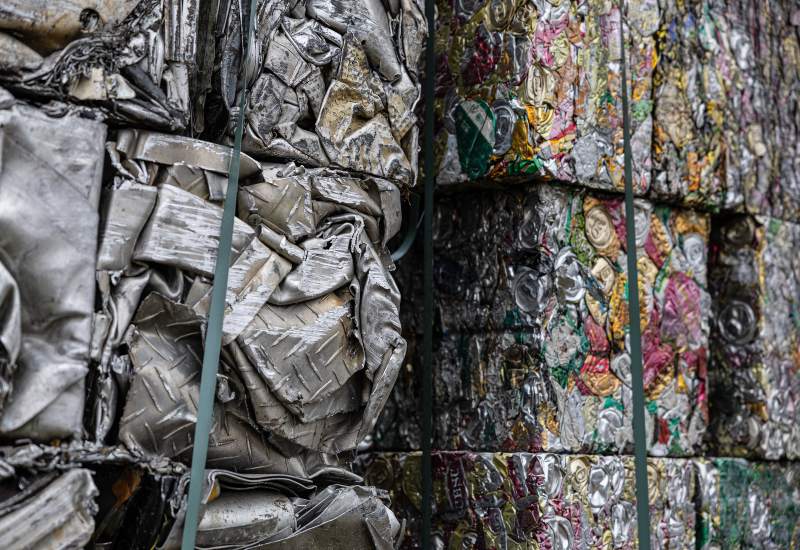
Mechanical preparation comes next. Many facilities recycle metal by shredding and pressing to improve handling and consistency. Shredding breaks materials into small, manageable pieces, while pressing compacts them into dense loads that are easier to store and transport.
Stage 4: Melting and Purification
Once the metal is clean and prepared, it moves into high-temperature furnaces. Each type of metal is melted separately to maintain purity. Copper metal recycling is particularly precise during this stage. Even small contaminants can affect conductivity, so purification standards are strict.
Melting transforms solid scrap into a liquid state, so it can be reshaped and reused. This is the most energy-intensive step of the recycled metal lifecycle, yet it’s still far more efficient than producing metal from raw ore.
Stage 5: Forming and Casting
Once the metal has been melted and purified, it’s shaped into forms that manufacturers can use. Common outputs include ingots, billets, sheets, and coils. The goal here is consistency. Manufacturers expect recycled metal to perform the same as newly produced material, so the casting process must be tightly controlled. Standardized shapes and carefully managed compositions ensure the final product meets industry requirements.
Stage 6: Redistribution and Manufacturing
Once formed, recycled metal is sent to manufacturers who turn it into new products. Materials that once served one purpose now move into entirely new applications. You’ll find recycled metal in the following:
- Construction materials
- Infrastructure projects
- Automotive parts
- Renewable energy systems
- Electronics
- Packaging materials
- Consumer goods
Stage 7: Transportation & Distribution
The final stage moves recycled metal from processing facilities to manufacturers and end users. Transportation connects each part of the recycled metal lifecycle, keeping materials flowing efficiently across regions and industries. Efficient logistics include:
- Bulk shipping: Rail and truck systems move large quantities of recycled metal cost-effectively.
- Regional distribution: Facilities supply local manufacturers whenever possible to shorten transportation distances.
- Inventory management: Materials are stored and delivered based on demand to ensure manufacturers receive consistent supplies without overstocking.
- Load optimization: Shredded and pressed materials enable denser loads for improved transportation efficiency.
- Scheduling and coordination: Timely pickups and deliveries keep production lines running smoothly.
- Compliance and documentation: Proper handling, tracking, and reporting ensure materials meet regulatory requirements throughout the recycled metal lifecycle.
Why Choose North Star Metal Recycling?
North Star Metal Recycling has built a reputation as a leading provider of scrap metal recycling services across Vancouver, Edmonton, Calgary, Kelowna, and Kamloops. We operate a state-of-the-art facility, complete with modern equipment, digital truck scales, and a fleet to assist in material transport. Our team is proud to deliver exceptional customer service while contributing to a cleaner environment. We know our role matters in protecting natural resources and supporting the local economy, and we’re committed to continually improving our operations for the future. Contact us today with any recycling questions or to request a quote.