
What Is Wire Recycling & Why Does It Matter?
If you work in waste management or material recovery, you already know how much valuable metal passes through your hands every day. Wire is easy to overlook, but it holds serious recovery potential. From construction waste to demolition projects, wire shows up everywhere. When handled properly, it becomes a valuable reusable resource rather than landfill waste.
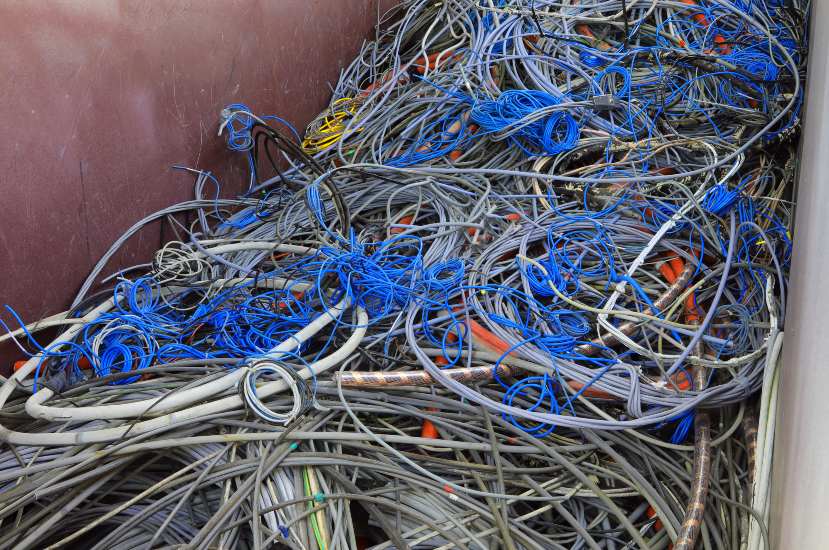
What Is Wire Recycling?
Wire recycling is the process of collecting, processing, and recovering metals—mainly copper and aluminum—from insulated or bare wires. Instead of discarding used or leftover wiring, valuable metal is separated from the insulation and reintroduced into the manufacturing cycle.
What Types of Wires Can Be Recycled?
Most wires you encounter on the job have recycling potential, though the value and processing method may vary. Here’s a brief summary of what qualifies to simplify your sorting efforts and improve recovery rates:
- Copper wiring includes high-value conductors found in building systems, appliances, and data cables. Its strong conductivity and consistent market demand make copper wire recycling one of the most profitable streams.
- Aluminum wiring is common in overhead power lines and certain structural applications. Aluminum wire recycling delivers solid returns when the material is clean and properly separated.
- Insulated electrical wire covers everyday items like household wiring, extension cords, and low-voltage cables. Electrical wire recycling involves removing the insulation to recover the metal inside.
- Armoured cable designed for industrial environments features a protective outer layer that requires more intensive processing. Scrap wire recycling facilities with the right equipment can handle these materials effectively.
- Data and telecom cables include coaxial, Ethernet, and fibre optic lines used in communications infrastructure. Processing methods depend on composition, as non-metallic components may be present.
Why Wire Recycling Matters
When wire ends up in a landfill, valuable metals are lost, and coating materials can break down in ways that affect soil and groundwater quality. Wire recycling reduces environmental impact by keeping these materials out of landfills and lowering the need to extract new resources. It also supports a more efficient flow of materials through the economy, where recovered metals move back into production instead of being discarded. For anyone in waste management, wire recycling strengthens environmental performance while keeping operations efficient and economically sound.
Which Industries Benefit from Wire Recycling?
Wire recycling spans a wide range of industries, many of which generate consistent volumes of scrap. Each of these sectors benefits from reliable scrap wire recycling programs in Vancouver:
- Construction and demolition
- Manufacturing
- Utilities and energy
- Telecommunications
- Automotive and transportation
What Is the Process of Wire Recycling?
The wire recycling process is straightforward in principle but requires the right equipment and handling practices to maximize recovery. Here’s how it works:
- Collection: Wire is gathered from job sites, facilities, or demolition work.
- Sorting: Materials are separated by type, such as copper vs. aluminum and insulated vs. bare.
- Stripping or shredding: Machines remove insulation or break down wire into smaller pieces.
- Separation: Metal is separated from insulation using mechanical or density-based methods.
- Processing: Clean metal is prepared for resale or reintroduction into manufacturing.
What Are the Benefits of Wire Recycling?
Once you build wire recycling into your operations, the advantages become clear:
- Resource conservation: Copper and aluminum stay in circulation, reducing the demand for raw extraction.
- Energy savings: Recycling metals consumes far less energy than producing them from ore.
- Cost efficiency: Selling scrap materials generates revenue rather than incurring disposal costs.
- Reduced landfill pressure: Less waste ends up in the already-strained landfill system.
- Stronger sustainability metrics: Recycling provides measurable data that supports environmental targets and improves regulatory reporting accuracy.
What Are the Challenges in Wire Recycling?
Wire recycling is a highly effective process, but like any material recovery stream, it comes with operational challenges. Common hurdles include:
- Insulation removal: Some wires have thick or complex coatings that require specialized stripping or shredding equipment to cleanly separate the materials.
- Contamination: Dirt, oils, and mixed metals can degrade the quality of recovered material.
- Sorting inefficiencies: Poor separation at the source increases processing time and limits recovery value.
- Market fluctuations: Changes in copper and aluminum prices affect returns from one week to the next.
Overcoming these challenges starts with strong internal processes and training. It’s also beneficial to work with an experienced recycling partner equipped with the latest tools and systems.
Ready to Make the Most of Your Scrap Wire?
North Star Metal Recycling would be honoured to be your wire recycling partner. As a leader in metal recycling services since 1950, we continue to support customers across Vancouver, Edmonton, Calgary, Kelowna, and Kamloops with our modern facility built for convenience and efficiency. Our strong industry ties keep us aligned with best practices and evolving standards. We take pride in doing our part to support cleaner air, safer water, and a more responsible use of resources.
Every load of wire has value, and we’re here to make sure you get the most out of it. Contact us today with your recycling questions or request a quote to get started.